




















Most hosting comparisons focus on price, storage and speed. Those matter, but the moment you really learn what you are paying for is when something breaks: the site is down, email stops arriving or an update goes wrong. At that point, the quality of support decides whether you lose an hour or a week.
What good support looks like
- Available when you need it. For business-critical sites, 24/7 support for outages is essential, even if general questions are handled in office hours.
- Real people who understand the platform. First-line agents should be able to read logs, check DNS and restart services, not only send links to help articles.
- Clear channels. A ticket system for detailed issues, live chat or phone for urgent ones, and a public status page during incidents.
- Honest answers. Good support says what went wrong, what was done and what will prevent it next time.
- Proactive communication. Planned maintenance, security issues and price changes are announced in advance.
How to test support before you commit
- Send a pre-sales question with a technical detail, for example about PHP versions or backup retention, and see how quickly and accurately it is answered.
- Look at the provider's status page history: how often were there incidents, and how well were they explained?
- Read recent reviews that describe specific problems, rather than star ratings alone.
- Check whether support is included or charged per incident, and what counts as "out of scope".
Response times worth expecting
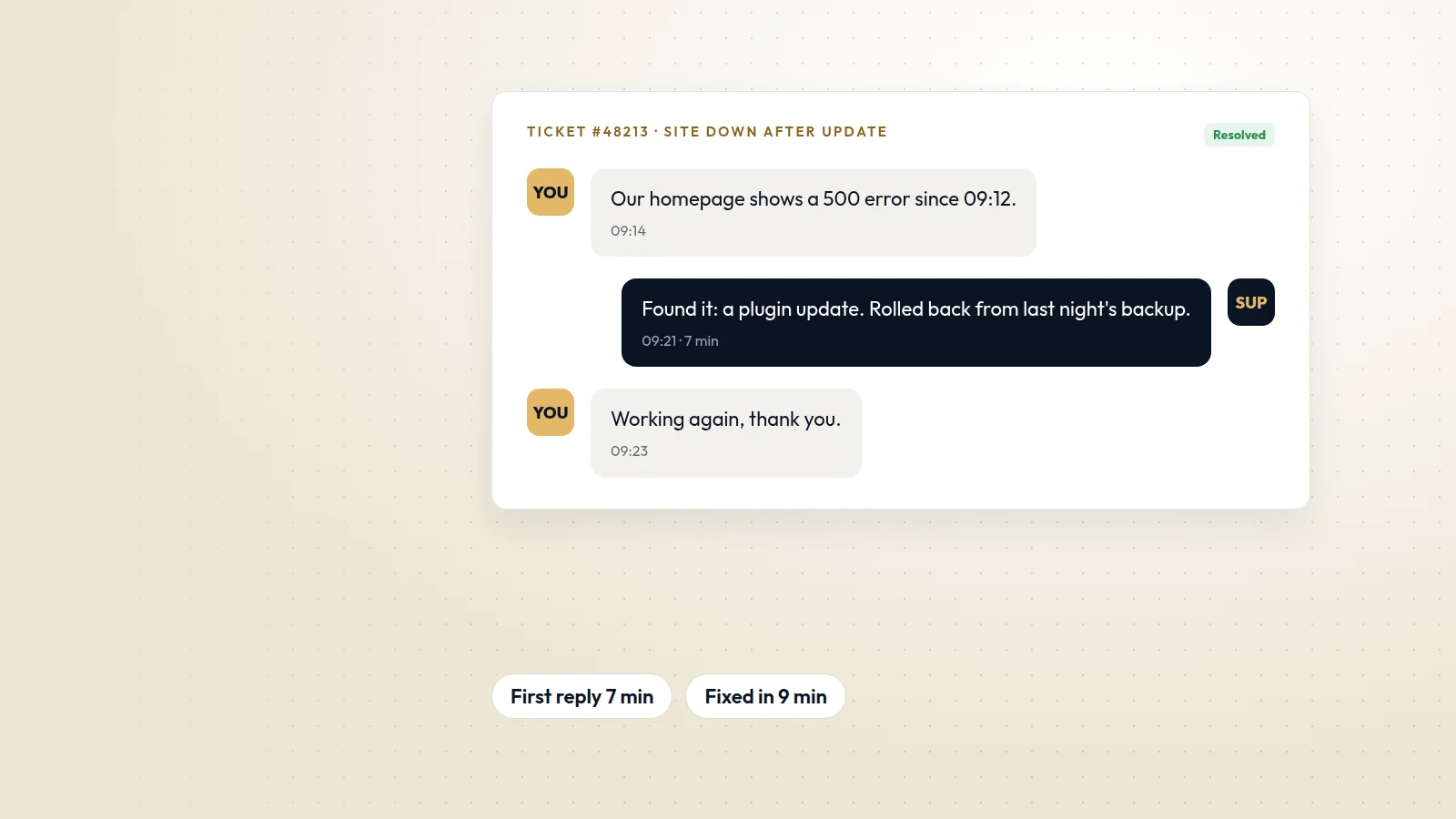
For a site outage, a first human response within minutes to an hour is reasonable. For general technical questions, within a working day. Ask the provider what they commit to in writing, and whether there is any compensation if they miss it.
The value of a single point of contact
Many businesses do not want to talk to a hosting company at all. With managed hosting, your agency handles the provider, reads the logs and fixes the problem, and you get one clear explanation. That is how we work with clients whose sites we host: one contact for the website, the server, the domain and email, with backups and monitoring in place before anything goes wrong.
Cheap hosting with poor support is rarely a saving. Count the cost of one lost day of enquiries or sales, and the difference in price usually looks small.