













Adding languages to a website is rarely a translation problem. It is a structure problem. The sites we build for investors, collectors and fashion buyers work in up to 34 languages, and the hard part is never the words themselves: it is deciding how each language lives on the site, how search engines understand the relationship between versions, and how content stays in sync as the site grows.
Choose one URL structure and keep it
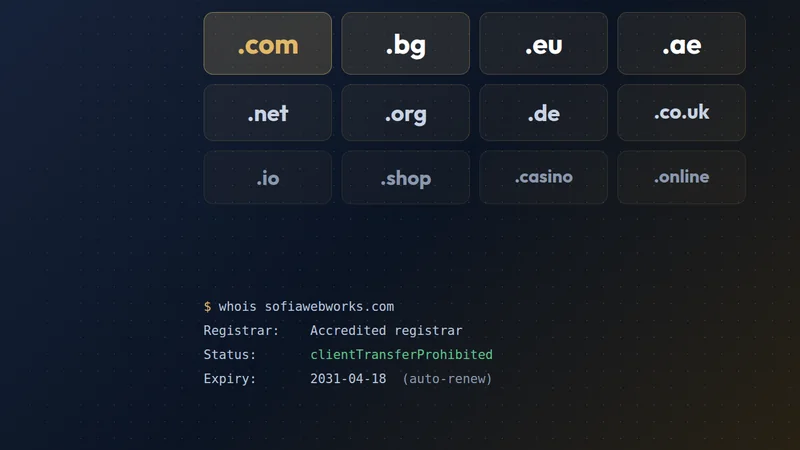
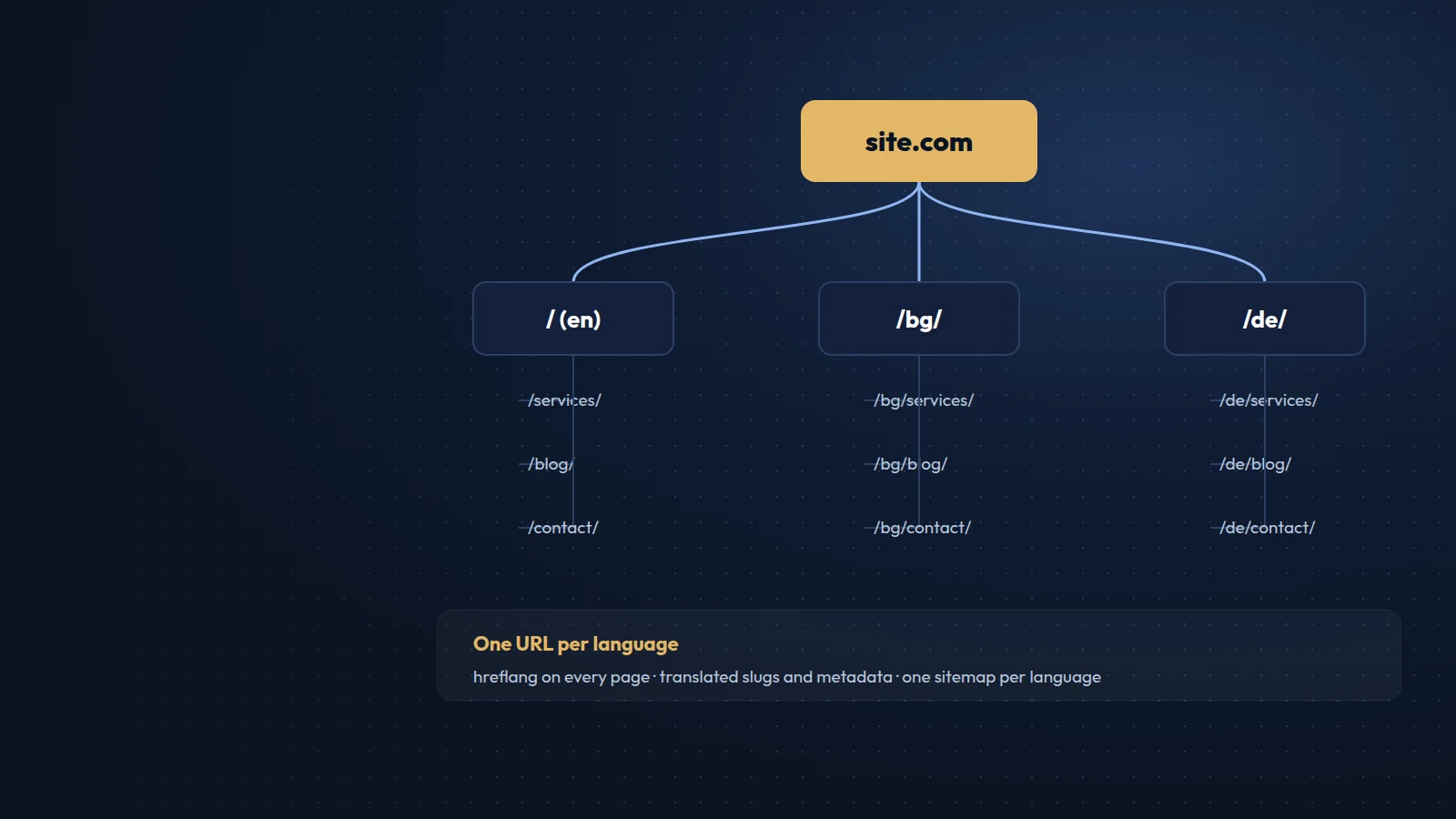
There are three common options: subfolders (example.com/bg/), subdomains (bg.example.com) and separate country domains (example.bg). For most businesses, subfolders are the simplest and strongest choice. All languages share the authority of one domain, there is one hosting setup and one SSL certificate, and analytics stay in one place. We use subfolders on almost every multilingual project, with the main language at the root.
Tell search engines which pages belong together
Every language version of a page should list all its alternatives with hreflang tags, including itself, plus an x-default for visitors whose language you do not support. The tags must be reciprocal: if the English page points to the Bulgarian page, the Bulgarian page must point back. Missing return links are the most common reason hreflang is ignored. We generate these tags and the matching sitemap entries automatically, so they cannot drift out of sync.
Translate slugs, titles and metadata, not only body text
A Bulgarian visitor searching in Bulgarian sees your page title and description first. Translate them properly, write them for the local search intent, and consider translated URL slugs for key pages. Images need translated alt text too.
Plan the translation workflow before launch
- Decide which languages get full content and which get a core set of pages.
- Keep one source language and track which pages changed since the last translation.
- Use professional translators for legal, financial and sales pages; machine translation with human review can work for large catalogues.
- Never publish untranslated placeholder pages; they are thin content in the eyes of search engines.
Let visitors choose
Do not force redirects based on IP address or browser language. Offer a clear language switcher on every page that links to the equivalent page, not the homepage. Search engine bots usually crawl from one country, and forced redirects can hide entire language versions from them.
The short version
One domain, subfolders per language, reciprocal hreflang, translated metadata and a written workflow. Get these right at the start and every new language becomes a routine addition rather than a rebuild.