

















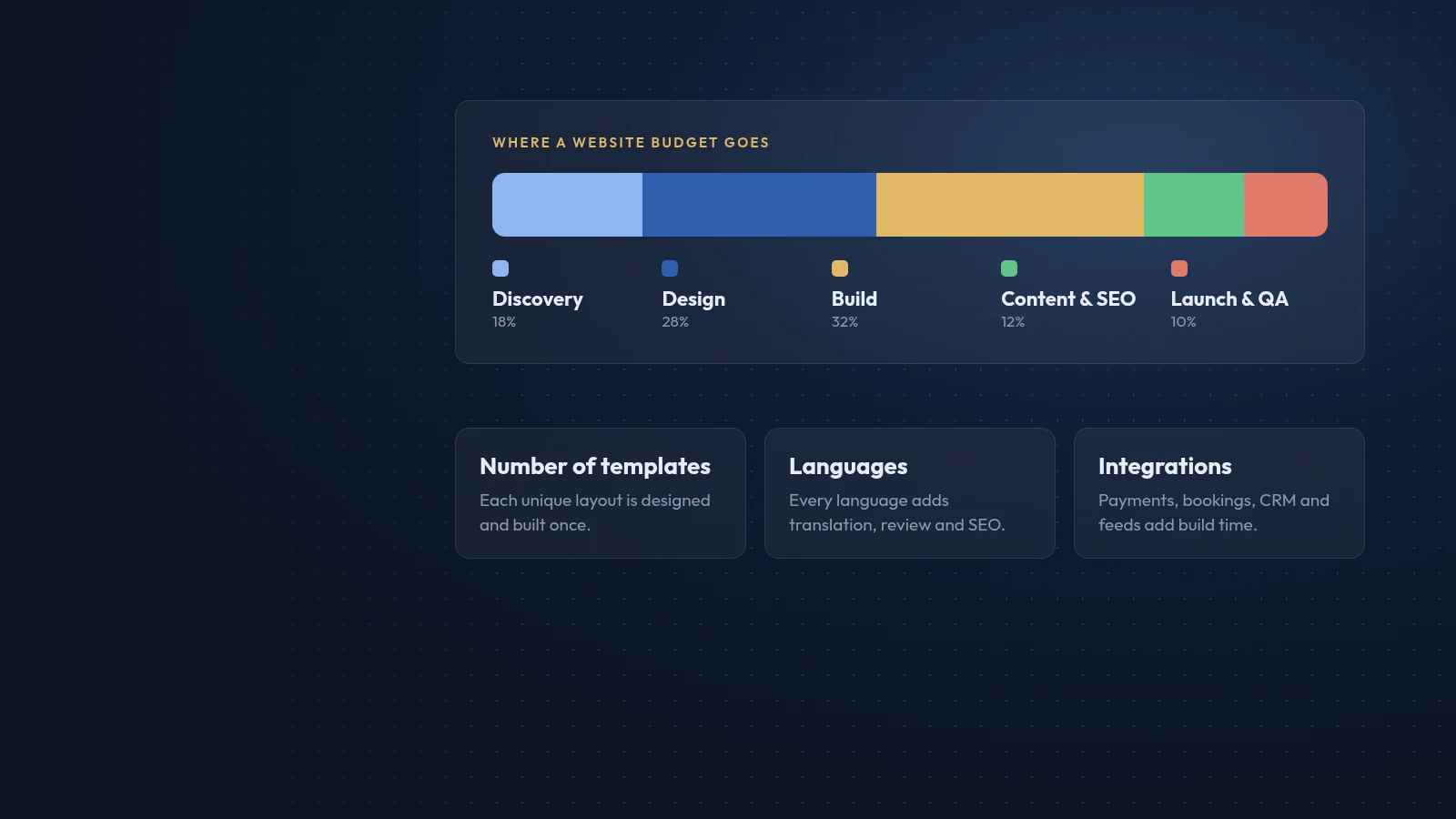
Two websites that look similar on the surface can differ in cost by a factor of ten. The difference is almost never the colour scheme; it is the amount of structure, content and functionality behind the pages. Knowing what drives the price helps you decide where to invest and where to keep things simple.
Number and type of page templates
A site with ten pages built from three templates costs far less than a site with ten unique layouts. Directories and catalogues can have thousands of pages from a handful of templates, so the template count matters more than the page count.
Languages
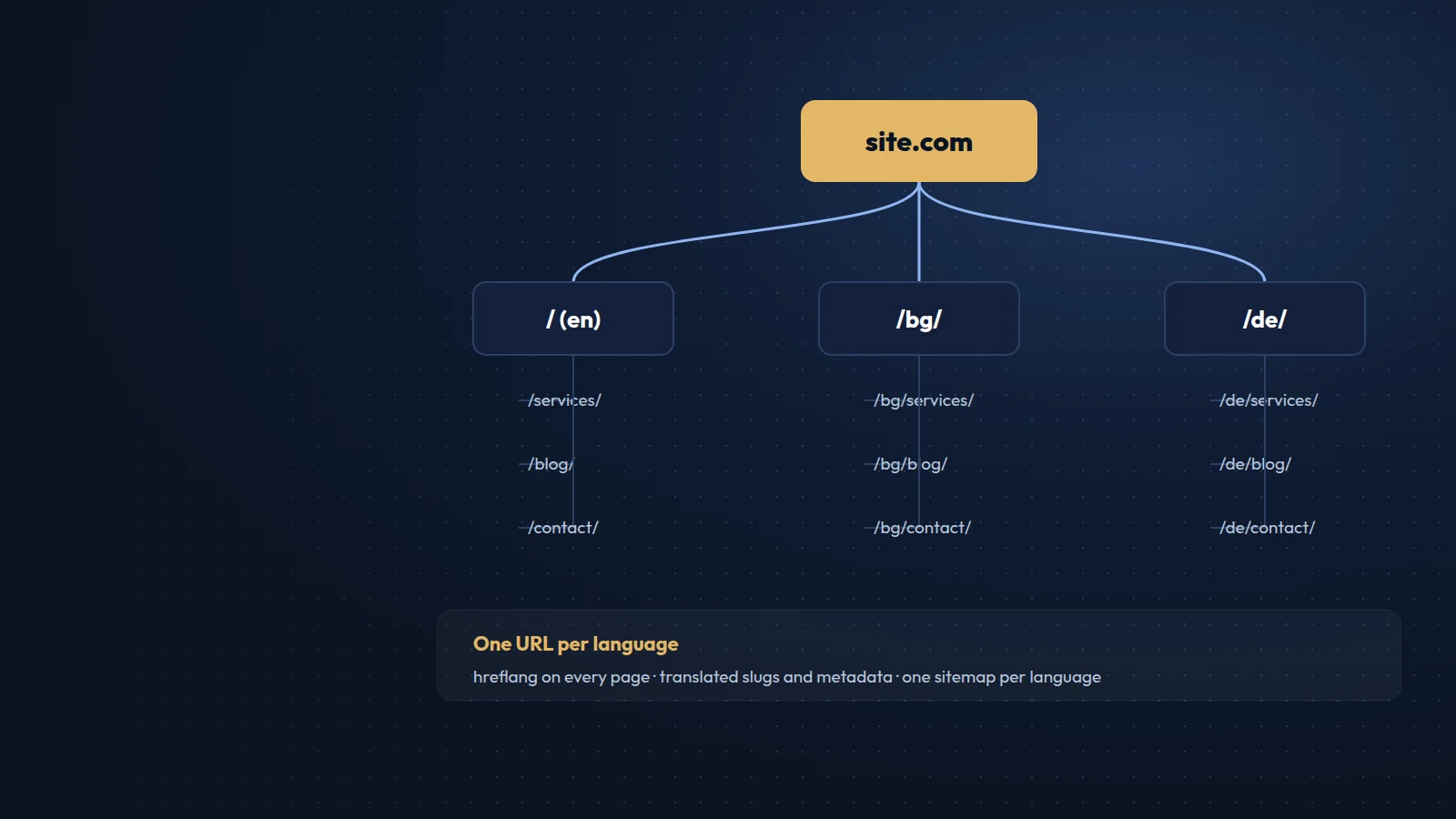
Each language adds translation, review, metadata and testing. The structure for multiple languages is best built in from the start, even if only one language launches first.
Content
Who writes the text and supplies the images? Copywriting, photography and sourcing data for directories are often the largest hidden part of a project. Ready, approved content shortens any timeline.
Functionality
- Contact and enquiry forms: simple.
- Search, filters and maps: moderate.
- User accounts, payments, bookings or member areas: significant, and they add ongoing maintenance.
- Integrations with CRMs, accounting or external data: depends on the other system's API.
Migration and SEO
Moving from an old site means inventorying URLs, writing redirects and preserving rankings. It is essential work and should be in the scope, not discovered at the end.
Care after launch
Hosting, backups, updates, monitoring and small changes are a monthly cost. Budget for them from the start so the site stays fast and secure.
How to get a clear quote
Bring a list of the pages you need, examples of sites you like and why, the languages, who will provide the content, and any must-have features. With that, we can give you a fixed proposal with a sitemap, scope and timeline after a single discovery call.