





















We build both. This site is a static site generated from content files; several of our clients run large WordPress publications. Neither is better in general. Each is better for a particular kind of website and team.
What a static site is
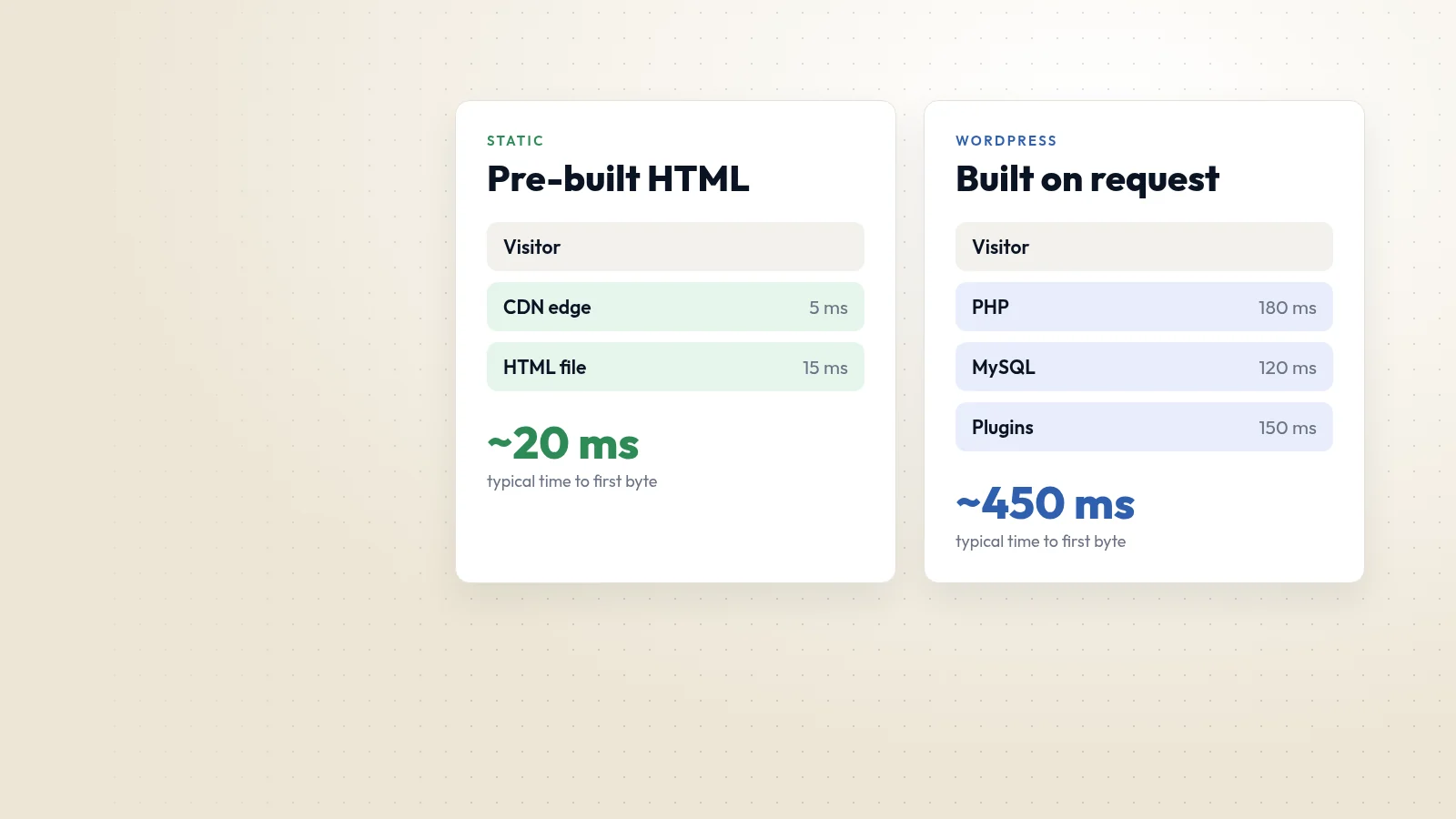
A static site is a set of ready-made HTML pages produced by a build step and served directly by the web server. There is no database and no code running on each request. Pages load very quickly, there is very little to attack, and hosting is cheap and simple. Changes are made in content files or a light admin panel, then the site is rebuilt and deployed, usually in seconds.
What WordPress is good at
WordPress stores content in a database and builds pages on request. Its strength is editing: many authors, scheduled posts, media libraries, comments and a huge choice of plugins for memberships, forms and shops. If several people publish every day, WordPress is often the practical choice.
Questions that decide it
- Who edits the site, and how often? A few updates a month favour static; a daily newsroom favours WordPress.
- Does the site need user accounts, carts or member areas? These need a dynamic platform, whether WordPress, Laravel or a hosted service.
- How important are speed and security? Static sites are faster and safer by default; WordPress can match them, but only with careful hosting, caching and updates.
- What is the budget for maintenance? Every WordPress site needs core, theme and plugin updates for its whole life.
The middle ground
Many sites combine both: a static marketing site with a WordPress or headless content source behind it, or a static site with a small, Git-backed admin for prices and posts. We often recommend this for company sites that change weekly rather than hourly.
Our rule of thumb
If the site is mainly for presenting a business, start static and add only the dynamic parts you need. If the site is a publication or a platform with users, choose a dynamic system and budget for its upkeep from day one.