



















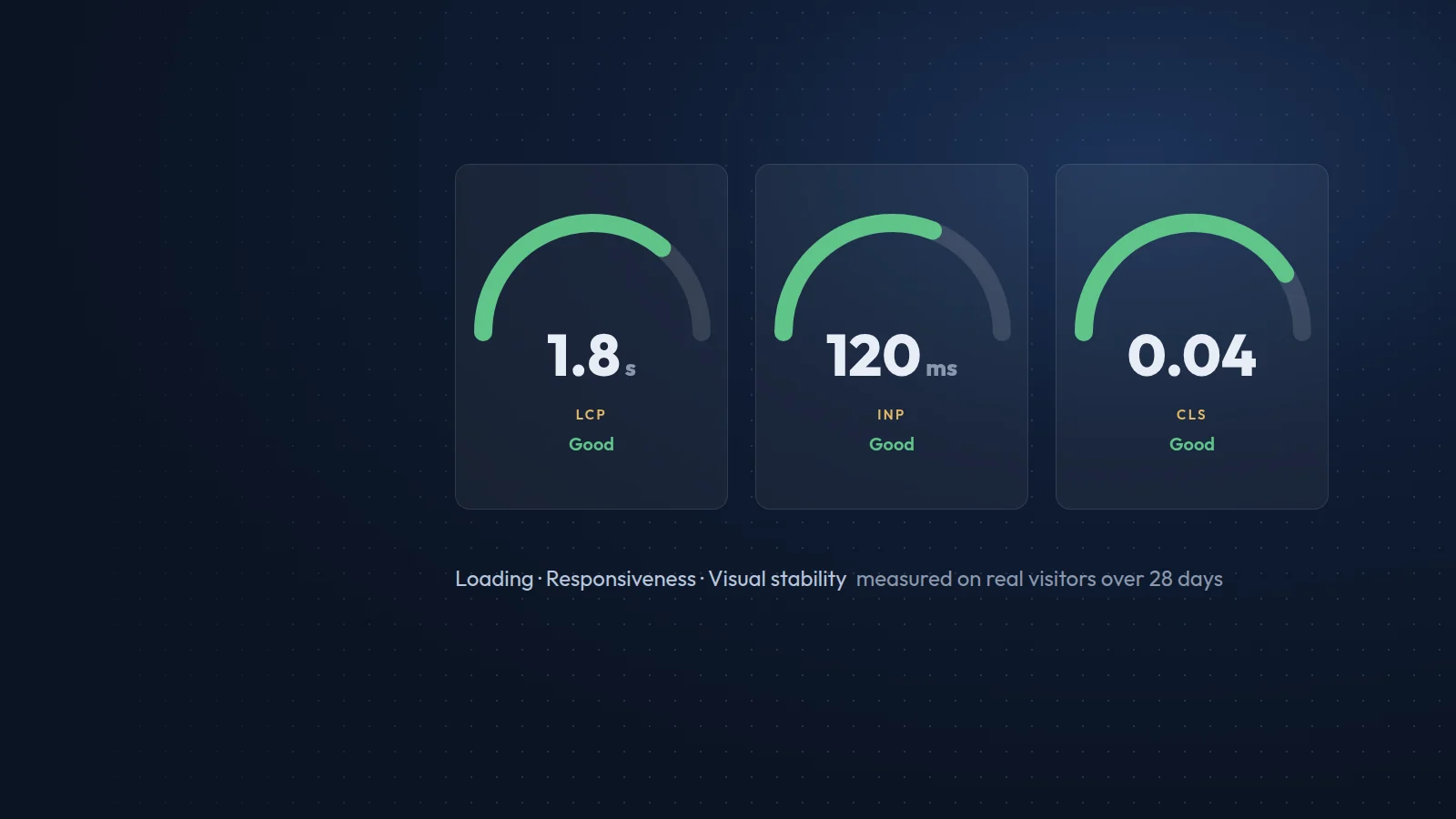
Core Web Vitals are three measurements Google uses to describe how a page feels to real visitors. They are part of how Google evaluates page experience, and more importantly, they track the things that make people leave a slow or jumpy site.
The three measurements
- Largest Contentful Paint (LCP): how long the main content, usually a hero image or heading, takes to appear. Good is 2.5 seconds or less.
- Interaction to Next Paint (INP): how quickly the page responds when someone taps, clicks or types. Good is 200 milliseconds or less. INP replaced the older First Input Delay metric in 2024.
- Cumulative Layout Shift (CLS): how much the page jumps around while loading. Good is 0.1 or less.
Google looks at the 75th percentile of real visits over the previous 28 days, so a fast test on your own computer is not enough; the site has to be fast for visitors on ordinary phones and networks.
Where to see your numbers
PageSpeed Insights shows both lab tests and real-user data for your pages. Search Console has a Core Web Vitals report that groups similar pages, which is useful for larger sites.
The changes that usually matter most
- Serve images in modern formats such as WebP or AVIF, at the size they are displayed, and set width and height so space is reserved.
- Load the main hero image early and lazy-load images further down the page.
- Self-host fonts, limit the number of weights and use font-display: swap.
- Remove scripts you do not need, and delay chat widgets and trackers until after the page is usable.
- Use good hosting with HTTP/2 or HTTP/3, compression and caching.
Speed as a habit
The hardest part is not fixing a slow site once; it is keeping it fast as new features, plugins and tracking tags are added. We set a performance budget for each project and check it before every release.