


















18+ 18+ · For adult visitors only
This section describes our technical work for gambling-related websites. Sofia Web Works does not operate, promote or offer gambling, bonuses or betting. Gambling can be addictive. Please play responsibly, and only where it is legal for you.
Free, confidential help: BeGambleAware · Gambling Therapy · GamCare
Every modern slot game, online or in a land-based casino, is controlled by a random number generator, or RNG. Understanding how it works is the best protection against the many myths about "hot" machines, patterns and winning systems.
What an RNG is
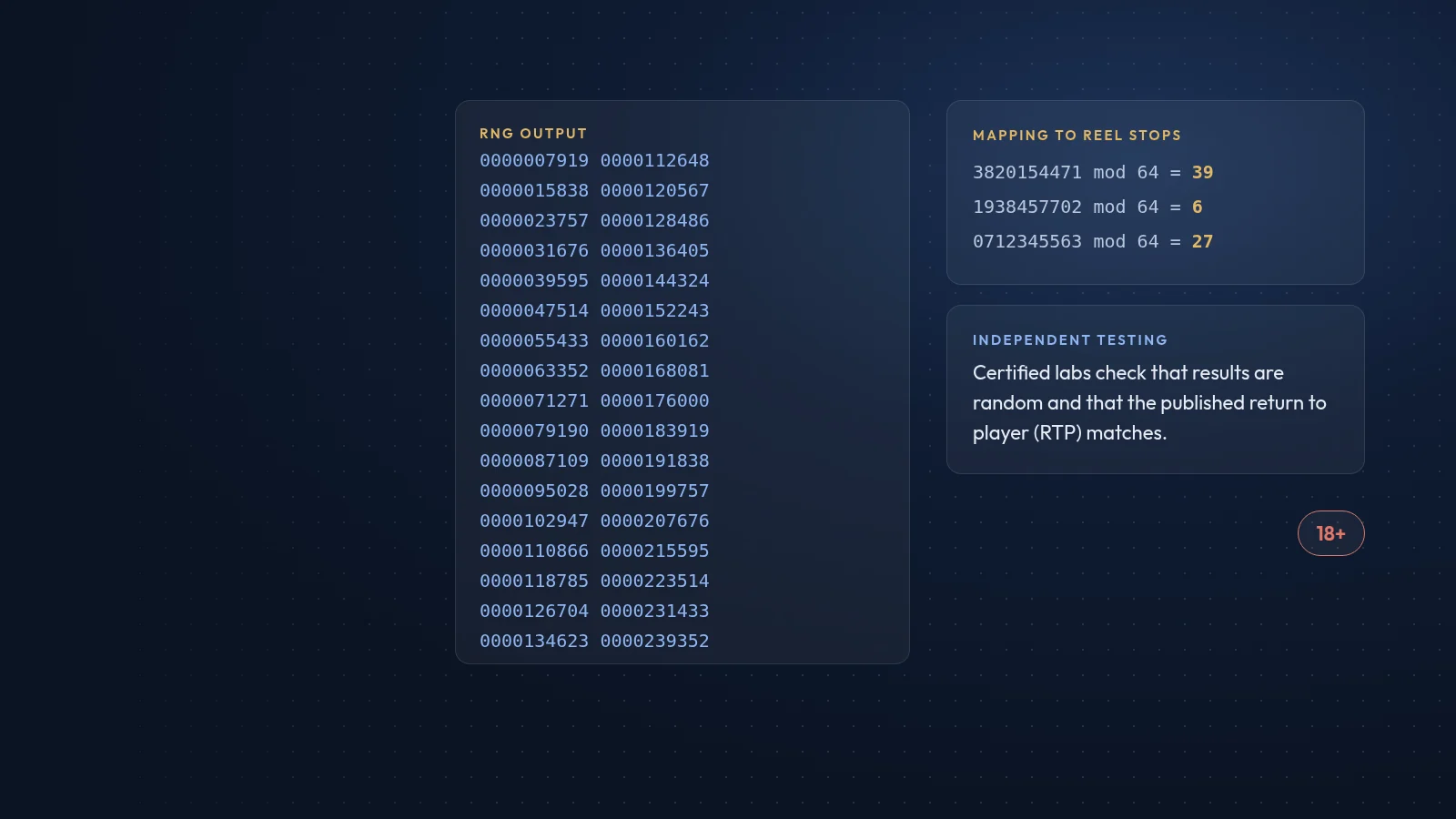
An RNG is an algorithm that produces a constant stream of numbers with no predictable pattern. Slot games use pseudo-random number generators: software that starts from a seed value and applies a mathematical formula to generate numbers that are statistically random. The generator runs continuously, producing numbers many times per second, even when nobody is playing.
How a spin is decided
At the moment you press the spin button, the game takes the current number, or a set of numbers, from the generator and maps it to a position on each reel. The animation of spinning reels is only a presentation of a result that was already decided in that instant. Each spin is independent of every previous spin.
Return to player and volatility
- Return to player (RTP) is the percentage of all money wagered that a game is designed to pay back over a very large number of spins. A 96% RTP does not mean you will get 96 back from 100 in a session; it is a long-term average across millions of spins.
- Volatility describes how winnings are distributed. Low-volatility games pay small amounts often; high-volatility games pay rarely but in larger amounts.
- The house edge is the difference between 100% and the RTP. Over time, the game is designed to keep that share.
How games are tested
In regulated markets, game RNGs and payout tables are tested by independent laboratories, such as GLI, eCOGRA, BMM and iTech Labs, before a game is approved. Regulators also require operators to protect the integrity of game systems and to run the certified version.
Why strategies do not work
- Because spins are independent, a machine is never "due" to pay out after a losing streak.
- Changing bet size or timing does not affect which number the RNG produces.
- Patterns noticed in past results are coincidence, not information about the next spin.
- Systems sold as ways to beat slots do not work.
The only real choices a player controls are how much to spend and for how long. Setting a budget in advance and using deposit and time limits are the most effective tools available.
This article is for adults aged 18 or over and is for information only. Gambling laws differ by country and change often; check the rules where you live. If gambling stops being fun, free and confidential help is available from BeGambleAware, Gambling Therapy and GamCare.